
As Typhoon Haiyan, the strongest storm to ever make landfall, barrels toward Vietnam and China, as many as 10,000 people are feared dead in the Philippines, which was ravaged by its powerful winds and sea surges.
 A senior regional police official and a city administrator in typhoon-devastated Tacloban city in the central Philippines say the death toll there from the storm, which hit Friday, could reach 10,000 people, according to The Associated Press.
 Regional police chief Elmer Soria told the AP that on Saturday he was briefed by Leyte provincial Gov. Dominic Petilla, who told him that there were about 10,000 deaths on the island. Most of the deaths were from drowning or caused by collapsed buildings, he said. Tacloban city administrator Tecson Lim said that the death toll in the city alone "could go up to 10,000," the AP reports.
 "We have so many dead people. We don't have bags," said mayor Remedios Petilla of Palo, a municipality in the Eastern Visayas region that was hard hit.
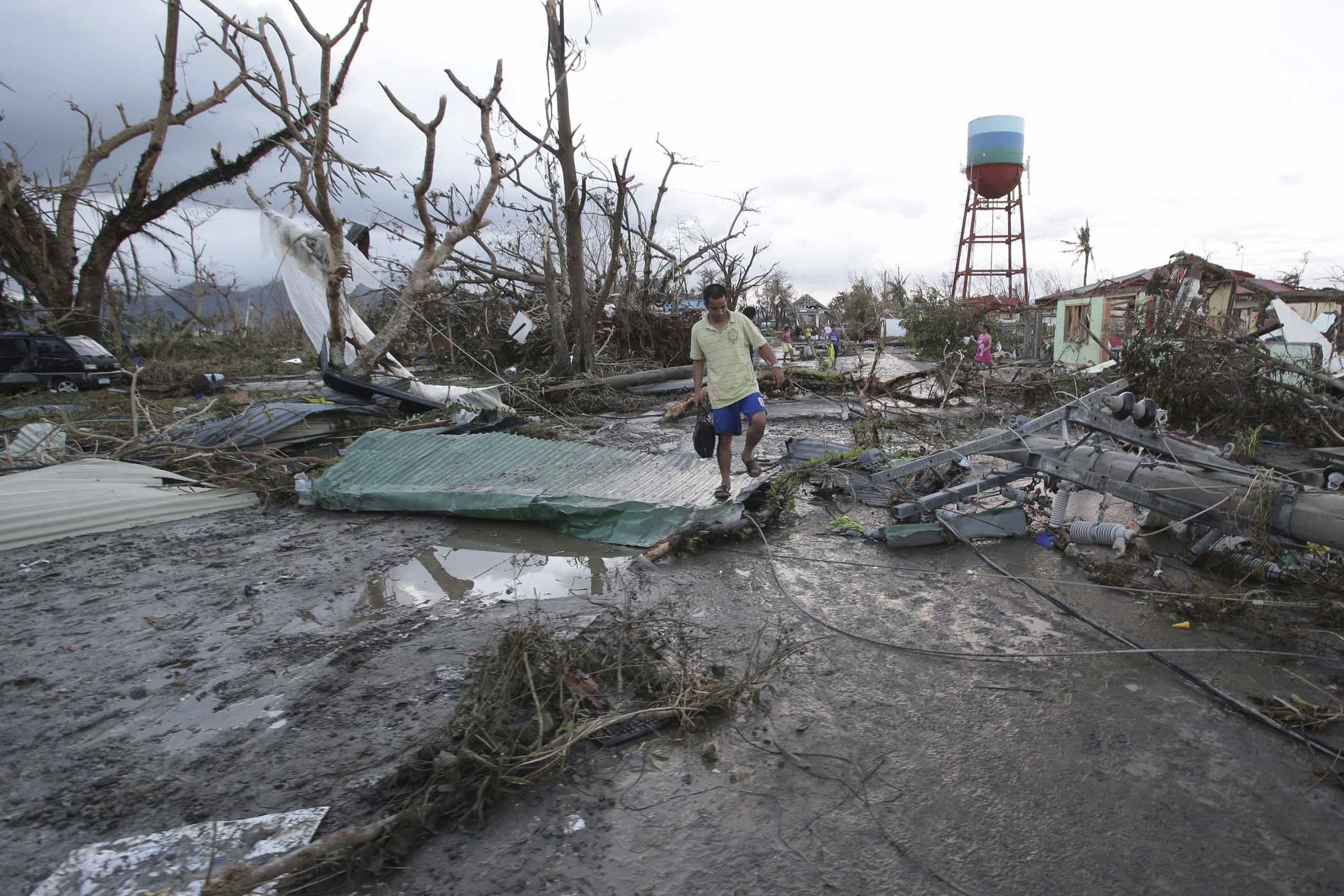
A half-dozen central Philippine islands are now reeling from Typhoon Haiyan after it made landfall early Friday morning. The storm, with sustained winds of nearly 200 miles per hour, flattened entire towns in the country's southern and central regions.
 The number of families affected by the typhoon has reached the 2 million mark, composed of 9.53 million people, according to a statement from the Philippine Department of Social Welfare and Development. Some 96,039 displaced families with 449,416 people are staying in 1,790 evacuation centers, while 36,627 other families with 182,379 people temporarily sought shelter in their friends and relatives' houses, according to the statement.
The typhoon made landfall at 4:40 a.m. local time near Guiuan, on the Philippine island of Samar, about 405 miles southeast of the country's capital, Manila. The speed of the storm may have ultimately been the country's salvation, as Typhoon Haiyan quickly blew across the island nation rather than sitting over land.
As the storm is moving west it is weakening, and still has yet to make another landfall. The storm is now acting just like a category 1 hurricane, moving with approximately 75 mile per hour winds. With six-plus inches of rainfall anticipated in Southeast China, the region is on alert for mudslides.
 Overturned cars and an airport building itself completely destroyed have been reported in Tacloban, where the BBC said that there have already been reports of widespread looting inside the city.
Bodies of the dead are scattered through the country's streets as residents await relief. With power and communication out for millions, it could take days, if not weeks, before officials in the Philippines learn the full extent of the damage.
 "The devastation is, I don't have the words for it," Interior Secretary Max Roxas told the Associated Press. "It's really horrific. It's a great human tragedy."
The U.S. embassy in Manila has announced $100,000 in disaster relief for typhoon recovery, according to a statement released Saturday. A Humanitarian Assistance Survey Team is poised to fly to Manila today to conduct a needs assessment.
 Secretary of State John Kerry released a statement of condolence for deaths in the Philippines on Saturday.
"I know that these horrific acts of nature are a burden that you have wrestled with and courageously surmounted before," he said. "Your spirit is strong. The United States stands ready to help, our embassies in the Philippines and Palau are in close contact with your governments, and our most heartfelt prayers are with you."
 The U.S. Department of Defense announced that the initial focus of humanitarian relief operations will include surface maritime search and rescue (SAR), medium-heavy helicopter lift support, airborne maritime SAR, fixed wing lift support and logistics enablers.
Members of the Filipino community living in the United States are expressing concern and heartbreak after the typhoon struck. Rowena David runs a grocery store with her husband in Philadelphia, where the couple accepts donations for those affected.
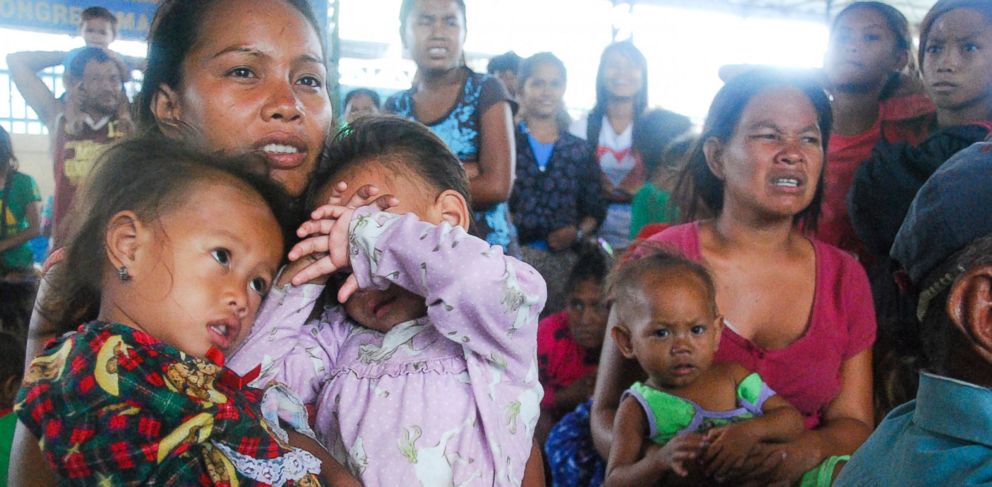 "Their houses are gone, and everything is gone basically," she said. "So I just, I feel bad for them."
Maria Isaacson told ABC News that her mother is visiting her in Philadelphia. Isaacson says her mother lives in one of the hardest hit areas.
 "She's trying to not burst into tears. I can see in her eyes it's devastating, you know," she said. "Especially when you're right there, you know, you don't know what's going on. It's just, it's heartbreaking."
No comments:
Post a Comment